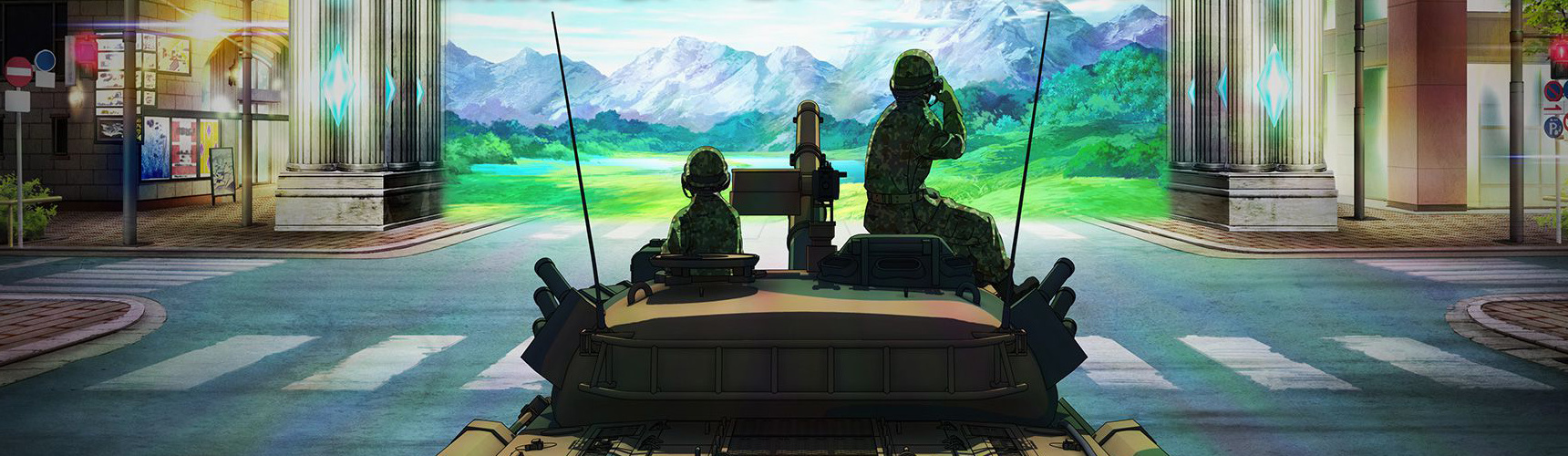
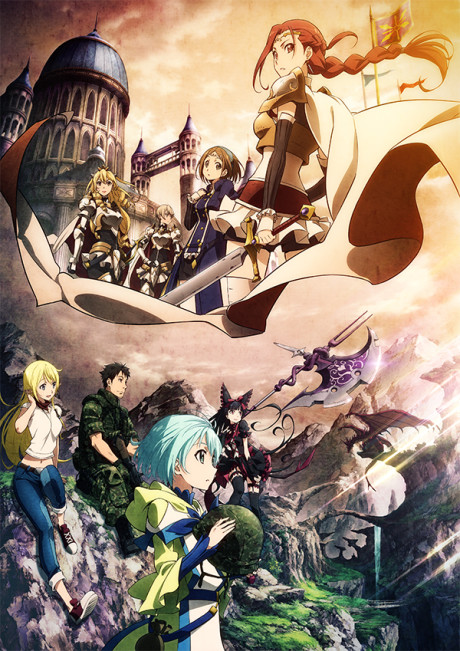
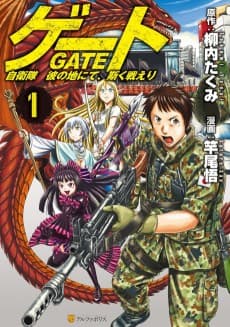
The military fantasy series begins when a gate appears in Tokyo's Ginza district sometime in the 21st century. From the gate pours out monsters, knights from middle-age Europe, and other fantasy-like beings, and they kill many of the citizens of Tokyo. This event is known as the Ginza Incident.
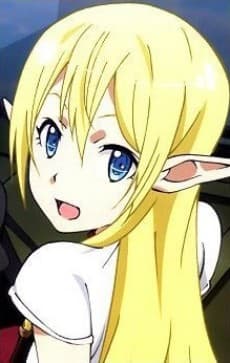
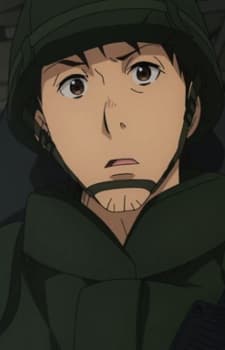
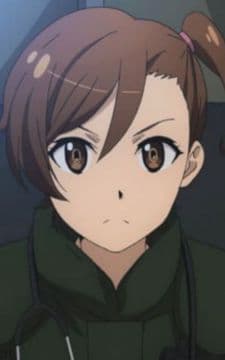
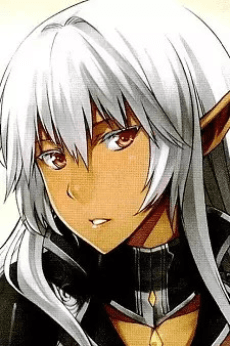
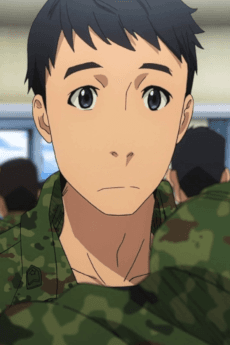
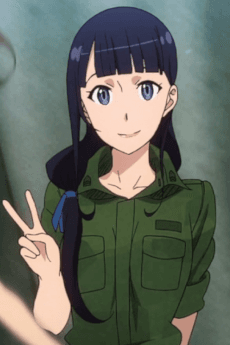
The government sends a small group of soldiers from the Japanese Self-Defense Forces (a replacement for Japan's military) to the alternate world beyond the gate. Led by otaku soldier Youji, they find that the villages in the world are being attacked by a dragon. An elf girl who is a survivor from the dragon's rampage joins the group in their travels across the dangerous new world.
(Source: Anime News Network)
Centered around the life and activities of military personnel.
Isekai92%
Features a character from a modern-day setting being transported into an alternate world and has to adapt to their new surroundings.
War87%
Partly or completely set during wartime.
Alternate Universe85%
Features multiple alternate universes in the same series.
Politics
Statistics
Watch Status
CURRENT
4.7%
PLANNING
22.4%
COMPLETED
68.3%
DROPPED
2.8%
PAUSED
1.7%
83%
Centers around politics, politicians, or government activities.
Male Protagonist80%
Main character is male.
Primarily Adult Cast71%
Main cast is mostly composed of characters above a high school age.
Primarily Female Cast67%
Main cast is mostly composed of female characters.
Reverse Isekai66%
Features a character from a fantasy world who is transported into a modern-day setting.
Magic65%
Prominently features magical elements or the use of magic.
Dragons62%
Prominently features mythical reptiles which generally have wings and can breathe fire.
Anachronism61%
Prominently features elements that are out of place in the historical period the work takes place in, particularly modern elements in a historical setting.
Tanks60%
Prominently features the use of tanks or other armoured vehicles.
Elf60%
Prominently features a character who is an elf.
Language Barrier54%
A barrier to communication between people who are unable to speak a common language.